
September 2014 Wrapup and Plans for October
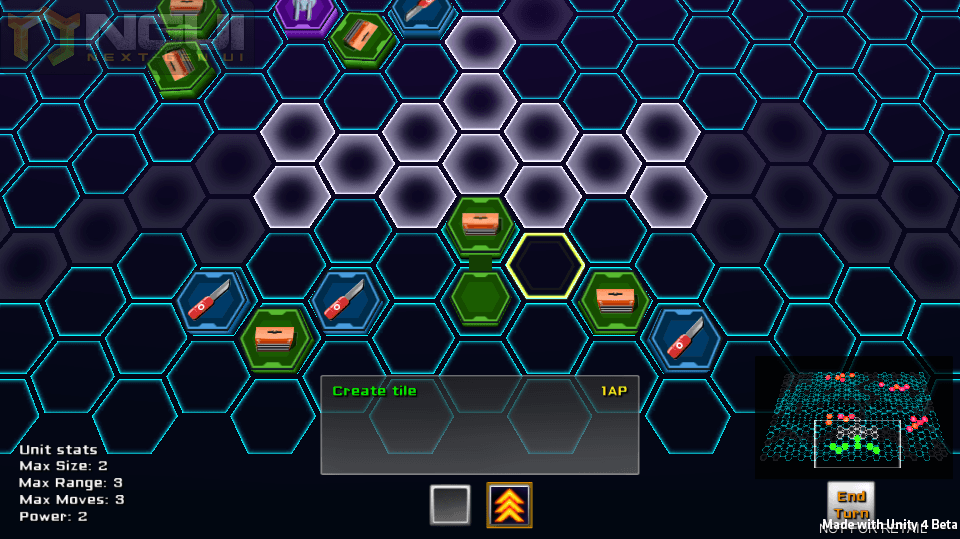
Today, we released the newest closed alpha of Zems, which we labeled as version 0.2.9 (semantic versioning). It’s an exciting release since we’ve been working on it for several months following the last ludum dare.
In this post, I recap September’s tenlist and talk about my plans for October.
September 2014 Tenlist
1. Have hex templates designed for Zems. (Completed)
While I did get hex frames developed in time for the latest alpha, we ended up cutting off the commission with the artist due to style issues and switched to a different artist. I felt like the previous artist had in mind a more cartoony style in the vein of HearthStone, and I wanted something more serious-looking.
2. Have all white cards implemented and tested. (Mostly Complete)
Every card we have planned for the color white in Zems is implemented, but some of the cards have bugs or are not fully working.
3. Hire someone to convert Zems site PSDs to WordPress. (Incomplete, Moved)
In the end, I couldn’t find a company I trusted outside of the $5000+ quote I already received from a company I had worked with previously. Since we don’t need the site fully up and running right now, I’ve decided to table this item.
4. Produce a playable alpha build. (Incomplete, Not Moved)
While we did release an alpha build today, we failed to release it at the end of September like I had wanted. Deadlines are something I am still learning as far as the current team goes. Often when a deadline is set for X date, the reality is X + one week or more, and I’m still determining how best to publicly declare deadlines with my current team. It could just be that we need to release on time and patch later – after all, there’s a quote in business that says, “If you’re not embarrassed when you ship, then you shipped too late.”
5. Produce YouTube updates for Zems. (Incomplete, Removed)
I originally planned on starting up a Zems YouTube channel in September, but I’ve decided against the notion because it doesn’t fix the fundamental problem that current Zems marketing sucks. Instead, I’m talking to a marketing expert in the hopes that I can revamp the entire marketing strategy, which will likely include creating a YouTube channel in the near future.
6. Finalize Zems Kickstarter rewards and schedule. (Mostly Complete)
While April is statistically the best month to launch a Kickstarter, I don’t think going too many months deep into 2015 is a good idea for the project. I set the date for the first Monday of February 2015, reduced the Kickstarter scope to only cover art and sound assets (if we included other things like programming then the project goal would be $100,000+ and that’s not a good goal number for an unknown team), and finalized all but one reward for the project.
7. Add multiplayer to Cohack: Nightfall. (Completed)
Not much to say here other than it works.
8. Learn how to use Playmaker. (Partially Complete)
I watched a few video tutorials and played around a little bit, but ultimately I put Playmaker down. Since I work with some very good coders and have a pretty good understanding of how to modify existing scripts or create small scripts myself, I felt like Playmaker was too much work for setting up each individual state for everything and not every game needs to be run using state-based logic anyway.
9. Read Crossing the Chasm by Geoffrey A. Moore. (Completed)
This book was amazing. Possibly the slowest 200 page book I’ve ever read since I had to reread a lot of paragraphs to fully absorb what he was saying. I’ll have to reread it again in the future since some parts I will better understand a few years down the line.
10. Clean out my bookshelves. (Completed)
I also set down a mousetrap and caught/killed two mice along the way. I don’t know how they got into our house but modern-day mousetraps are actually quite innovative in their design.
Plans for October
I’m not making a list for this month. I started to, but then I realized there’s nothing “new” I want on my plate other than to continue the current things I’m doing and I didn’t want to put some more specific Zems deadlines on my personal list since separation of my life and the project is still important to me. I’m not really taking a break from any of my previous trends, though. The book I’ll be reading this month is Snow Crash by Neal Stephenson (recommended by several friends). I’ve also started watching Buffy the Vampire Slayer since I recently finished Veronica Mars and they’re somewhat similar. I’m still playing Magic: The Gathering in my free time and States is coming up this weekend so I need to get ready for that. It’s time consuming to practice for States and work on projects at the same time, but I’ll manage.
I’m not sure when I’m going to write again. My recent post on competitive EDH was heavily inspired based on my observations and I might write something in-depth again in the near future if something rests heavily in my mind.
A Foray Into Competitive Multiplayer EDH
Commander is a format embraced by players as the ‘casual’ format where crazy vintage combos that would never be viable in tournament formats such as Legacy and Modern can run rampant. The appeal for many players is the high variance, ability to build around the commander, and the ‘cute’ combos. The term ‘competitive EDH’ is then an oxymoron, as the format is intended to be casual and many people think that running a high-powered deck ruins the fun of the format. Unlike many of these players, I saw high-powered decks doing the things I always wanted to do in Magic – whether it’s having infinite mana on turn four (and a virtual omniscience until a combo piece is lost), drawing over twenty cards in a single turn, or cheating a big creature in faster than any Standard reanimator deck is capable of (although it’s arguably at the same speed as Show and Tell). To me, these decks were exciting and I had a hard time imagining why players got so frustrated about building slow decks that played out more or less like refined Modern decks instead of utilizing the tools the Vintage format offers. In this post, I want to talk about the competitive EDH metagame, the typical flow of the game, and why any commander deck with any general can be high-powered without having to have a turn 4 win to be viable in a competitive format.
The basis for this post comes from a Marath list I have developed that has gotten me kicked out of several rooms for simply being too strong or doing things that the other players thought were ‘too powerful’. Note that my Marath list has no infinite combos that win the game instantly other than its primary wincon is Felidar Sovereign, a card that requires me to have 40 life on my upkeep to instantly win (there are no combos that instantly put me to 40 life or higher in the deck). I believe EDH players have several misconceptions that bring down the capacity of their decks and therefore build slow decks that, like mentioned before, play out like refined Modern decks instead of the vintage powerhouses they could be. (You can find my Marath list at the bottom of this post.)
Early Turns – Mana Acquisition (Strategy 1)
High powered decks in competitive EDH typically take 1-3 turns to set up and are in full force by turn 4 at minimum. For combo decks like Sydri and Prossh, turn 4 is the average point at which infinite mana has been achieved and a win is possible. Many people with slower decks will concede or refuse to play with a player with a high-powered deck because they believe such power is unfun. However, sit down at a table where everyone has a high-powered deck and you will see real politics and tight play start to happen, with players hesitant to try to win due to the real threat of the other high-powered decks stopping them and taking them out first as the ‘public enemy’. However, very rarely do you see high-powered decks try to disrupt each other in the early turns – this is because these decks must devote these turns to their own setup and cannot waste time trying to stop one other person and letting the others get ahead. Below, I will go over several combos that are typically used.
Infinite Colorless Mana
Because this combo utilizes artifacts, virtually any deck is capable of using it. Note that not every high-powered deck that runs artifacts will run all of this combos – there are other ways to get a lot of mana (sometimes you don’t need infinite mana), with the most common being elfball (playing and using lots of mana dorks).
- Basalt Monolith + Rings of Brighthearth = Infinite Colorless (copy the untap ability, resolve the copy first, and before the original untap ability resolves, tap the Monolith again)
This is the only combo that is the basis of most high-powered lists that revolve around artifacts. Other infinite mana (often infinite colorless) combos will depend on specific color. For example, Sydri (esper colors) has all of the following artifact combos that go infinite:
- Basalt Monolith/Grim Monolith + Power Artifact = Infinite Colorless
- Grand Architect + Pili-Pala = Infinite Any Color
- Basalt Monolith / Grim Monolith + Voltaic Construct + Sydri, Galvanic Genius = Infinite Colorless
- Doubling Cube + Voltaic Construct + Sydri, Galvanic Genius = Infinite Mana Pool Doubling
- Doubling Cube + Filigree Sages = Infinite Mana Pool Doubling
- Aphetto Alchemist + Rings of Brighthearth + any artifact that taps for at least 3 mana and has an untap cost = Infinite Colorless
- Umbral Mantle + Training Grounds + Sydri, Galvanic Genius + Any artifact that taps for mana = Infinite Colorless
- Filigree Sages + Training Grounds + Gilded Lotus = Infinite mana of all colors
- Voltaic Construct + Sydri, Galvanic Genius + Any artifact that taps for 3 = Infinite colorless, unless untapping Gilded Lotus
Again, I want to stress that infinite mana is often times not necessary, and that in many cases, lots of mana is sufficient enough. Each color combination has ways to assemble fast mana with the exception of some mono-colored decks (unfortunately, there is not much non-green mono-decks can do and they are probably better off in the more casual tables), and Google is often times the deckbuilder’s best friend in finding them.
Elfball
A typical Elfball will often run a low number of lands, keep a low-land opening hand as long as it has dorks, and rely on creatures for ramp. The upside here is that such ramp is often faster than casting Cultivate or Kodama’s Reach on turn 3, faster than Skyshroud Claim and Rangers Path on turn 4, and vs. decks with Turn 2 Farseek, the Elfball deck will generally have more mana due to heavy dork usage and escalating amount of ramp/dorks being cast in each of the first three turns. A typical elfball also includes a Craterhoof Behemoth and/or Fierce Empath because the heavy creature count lends the deck to wins through a massive overrun swing.
- Arbor Elf
- Avacyn’s Pilgrim (if also playing white)
- Birds of Paradise
- Bloom Tender
- Boreal Druid
- Deathrite Shaman (very solid considering the number of fetchlands played in commander; be sure to run a high fetchland count yourself for better usage)
- Elves of Deep Shadow (if also playing black)
- Elvish Archdruid
- Elvish Mystic
- Elvish Spirit Guide (trading cards for faster acceleration is a common occurrence in high-powered lists such as Prossh and Derevi)
- Fyndhorn Elves
- Llanowar Elves
- Priest of Titania
- Simian Spirit Guide (if also playing red)
- Wall of Roots
Elfball decks typically run even more dorks depending on deck colors. For example, Druid of the Anima is a great color fixer for Naya and a very acceptable elf to run.
Note that using creatures as a fast manabase is volatile to sweepers, so Elfball decks typically use Chord of Calling, Green Sun’s Zenith, Eladamri’s Call, and other ways to find either Gaddock Teeg or Dauntless Escort. Elfball decks are also very resilient to land destruction because of their reliance on dorks, and high-powered elfball decks will typically run Armageddon or Ravages of War (although the latter is extremely expensive and not many have it) because blowing up lands is a good thing for them.
Common Staples
Seeing several lists in competitive multiplayer EDH has made me realize that many decks that do not have insane mana combos are still able to acquire a lot of mana if they run certain artifact cards. These cards are listed below, and some of them can be quite expensive:
- Sol Ring
- Mana Crypt
- Mana Vault
- Grim Monolith (often used with Voltaic Key)
- Basalt Monolith (often used with Voltaic Key)
- Signets
- Talismans
- Lotus Petal (same reason why decks run the Spirit Guides – getting a lot in play in the early turns is often more important than card advantage)
- Chrome Mox
- Mox Diamond
- Exploration
- Burgeoning
- Jeweled Amulet
- Coldsteel Heart
- Fellwar Stone
Protecting the Mana (Or Having Resiliency)
After the deck has established a solid mana income and has strong access to lots of mana, protecting this mana becomes key. Players are willing to risk getting blown out by a board wipe in exchange for putting all their mana ramp into elves because of the speed of basing your ramp on a single source (creatures), but this also means that such players are effectively out of the game if such mana sources are lost. As mentioned in the Elfball section, decks typically run a number of tutors designed to protect them from losing their mana sources, such as finding and casting Gaddock Teeg. Resiliency can even come in the form of numerous combo enablers, as in the case of Sydri – she has so many infinite mana combos that she doesn’t need to run a protection suite and can still play after her artifacts are destroyed (although politics becomes key here since Sydri is quite behind without access to artifact mana).
Often times when a high-powered deck takes on several lower-powered decks, the high-powered deck has access to massively more mana than the other players (sometimes more than all the opponents combined) and doesn’t need to invest in protecting its mana – it can simply combo off and win. In a game where several high-powered decks are in play, however, games become more swingy and players will often invest in protection rather than trying to go for a win outright (especially if opponents have infinite mana assembled). I’d like to point out here that more casual EDH players have a strange hatred for fast mana access when in reality, lots of mana (even infinite mana) does not accomplish much by itself. It is only when a player tries to make a drastic play that forces other players to take action and shut that player down. A lot of high-powered EDH ironically becomes a somewhat fair grindfest, especially when lots of heavy Stax effects are in play. Patience is often rewarded in high-level play, especially in decks like Sharuum that do not have as many combos as Sydri and often times will wait for an opportune moment before combo’ing off.
Cards for protecting mana:
- Counterspells, particularly ‘free’ ones like Force of Will and Pact of Negation
- Indestructible effects like Dauntless Escort (for elfball)
- Permission cards like Gaddock Teeg
- Stax Lockdown/Denial such as Hokori, Dust Drinker, Rising Waters, and Stasis
Fast Permission (Strategy 2)
For decks where fast mana ramp is either difficult or not possible, the game plan changes from one of fast mana to fast denial. The idea is that if you slow down the other decks that can theoretically ramp fast, you will have the time to get into the game before they combo you out. The following cards are all universally utilized in decks that try to use this method:
- Gaddock Teeg
- Thalia, Guardian of Thraben
- Linvala, Keeper of Silence
- Null Rod
- Stony Silence
- Sphere of Resistance (sure, it makes your own spells cost 1 more, but this is often worth it if your start is slow)
- Static Orb
- Stasis
- Tangle Wire
- Thorn of Amethyst
- Winter Orb
- Hokori, Dust Drinker
- Glowrider
- Kataki, War’s Wage
- Lodestone Golem
- Aura of Silence
- Rising Waters
- Root Maze
- Blood Moon / Magus of the Moon (only applicable for decks that are mono-red or two color with lots of basics or dorks)
Many of these permission cards can be accelerated into using mana dorks and played as early as turn 2, preventing players from setting up their fast mana combos. While some decks such as Hermit Druid do get lucky from time to time and win on the second turn, the high variance of the format often means you get at least 2-3 turns to employ your deck’s early strategy of either fast mana or fast permission.
Permission cards create a number of complaints among more casual players because they see fast permission as ‘fast unfun’, when in reality it is a safety wedge against the decks that use fast mana and these decks often play permission because of their slow starts. The outcries, of course, continue to come from players of more casual decks that are not designed to handle or fight through permission. Indeed, some casual decks are “defeated” by masses of permission, but it is important to note that this permission is played in competitive in order to force fast combo decks to play more fairly. With proper deck construction (namely mana sources being spread out and packing some amount of removal), the more casual decks should be able to play a fair game of EDH against fast permission because, as mentioned before, the lockdown is more intended towards fast combo decks – locking everyone else out of the game is just an extension of that plan. A player with an EDH deck with no removal of any kind probably shouldn’t be playing Magic in the first place, because the game really is about interaction instead of four players sitting down and playing 100% slow goldfish decks.
Marath’s Command
I built the Marath list for two main reasons – one, I have an altered art Marath, and two, no one thinks of Marath as a competitive commander by any means. The list I present below is not intended to be on the same power level as god-tier competitive multiplayer commanders like Sydri or Derevi, but it is built with the idea that such opponents may be sitting at the table. As such, it utilizes a fast permission strategy that allows it to slow down opponents until it can get its token/midrange strategy going. There is nothing fundamentally broken or wrong with fast permission (and this deck doesn’t pack as much permission as it could), but I am often kicked from online rooms due to poor opponents who believe casual EDH is meant to be non-interactive EDH where everyone gets to do what they want until someone goldfishes a win. There is a commander theory that 25% of your deck should be dedicated to interactive cards – a theory I greatly approve of, and as long as there is sufficient interaction in your deck, you can beat fast permission decks (many of whom are running permission just to make everyone play fair and punish bad deckbuilders who have little to no interaction).
Artifact (9)
- 1x Basilisk Collar
- 1x Birthing Pod
- 1x Mana Vault
- 1x Null Rod
- 1x Skullclamp
- 1x Sol Ring
- 1x Tangle Wire
- 1x Thorn of Amethyst
- 1x Winter Orb
Creature (36)
- 1x Arbor Elf
- 1x Avacyn’s Pilgrim
- 1x Aven Mindcensor
- 1x Birds of Paradise
- 1x Bloom Tender
- 1x Boreal Druid
- 1x Captain Sisay
- 1x Craterhoof Behemoth
- 1x Dauntless Escort
- 1x Druid of the Anima
- 1x Elvish Archdruid
- 1x Elvish Mystic
- 1x Eternal Witness
- 1x Felidar Sovereign
- 1x Fierce Empath
- 1x Fyndhorn Elves
- 1x Gaddock Teeg
- 1x Greenweaver Druid
- 1x Hokori, Dust Drinker
- 1x Imperial Recruiter
- 1x Karmic Guide
- 1x Knotvine Mystic
- 1x Linvala, Keeper of Silence
- 1x Llanowar Elves
- 1x Loxodon Gatekeeper
- 1x Nightshade Peddler
- 1x Nullmage Shepherd
- 1x Priest of Titania
- 1x Reveillark
- 1x Sakura-Tribe Elder
- 1x Seedborn Muse
- 1x Simian Spirit Guide
- 1x Spirit of the Labyrinth
- 1x Stoneforge Mystic
- 1x Wirewood Channeler
- 1x Yisan, the Wanderer Bard
Enchantment (6)
- 1x Aura Shards
- 1x Rest in Peace
- 1x Stony Silence
- 1x Stranglehold
- 1x Survival of the Fittest
- 1x Sylvan Library
Sorcery (8)
- 1x Armageddon
- 1x Calming Verse
- 1x Gamble
- 1x Green Sun’s Zenith
- 1x Hull Breach
- 1x Steelshaper’s Gift
- 1x Vandalblast
- 1x Wheel of Fortune
Instant (5)
Planeswalker (2)
Land (33)
- 1x Arid Mesa
- 1x Battlefield Forge
- 1x Brushland
- 1x Cavern of Souls
- 1x City of Brass
- 1x Clifftop Retreat
- 1x Command Tower
- 1x Exotic Orchard
- 1x Gaea’s Cradle
- 1x Gavony Township
- 1x Gemstone Caverns
- 1x Grove of the Burnwillows
- 1x Homeward Path
- 1x Horizon Canopy
- 1x Karplusan Forest
- 1x Mana Confluence
- 1x Plateau
- 1x Reflecting Pool
- 1x Rootbound Crag
- 1x Sacred Foundry
- 1x Savannah
- 1x Snow-Covered Forest
- 1x Snow-Covered Mountain
- 1x Snow-Covered Plains
- 1x Stomping Ground
- 1x Sunpetal Grove
- 1x Taiga
- 1x Tarnished Citadel
- 1x Temple Garden
- 1x Windswept Heath
- 1x Wooded Bastion
- 1x Wooded Foothills
- 1x Yavimaya Hollow
This list combines a fast elfball with fast permission in the same vein as current Derevi lists (note that Derevi is arguably the best competitive multiplayer deck at the moment because it can combine fast elfball with fast permission and still have access to the most ridiculously powerful blue spells in the format). It is not intended to take on a full table of high-powered lists (Marath is not capable of fighting through a full field of stronger and faster opponents), but can reasonably slow down one or two of them in a four-player game. However, the use of heavy permission often leads me to getting kicked from rooms for being “unfun.”
This long post is an initial observation based on my recent foray into high-powered competitive multiplayer EDH, a format that doesn’t actually exist but does have a tightknit small following of players who swear by powerful vintage cards and EDH games that don’t take hours but instead last as long as most sanctioned rounds (50 minutes max). Some of the information may be subject to change as new cards are introduced or certain cards are banned. I am also still a relative newcomer to the format so there may be information that needs to be added here – Hermit Druid, for example, utilizes neither of the two methods I described above and is instead just a fast graveyard combo deck that tries to go off as soon as it can. While I cannot guarantee that I will make another post of this length in the near future, EDH is a format I enjoy and I have learned lots of things about multiplayer deck construction in a format where power levels greatly vary.
August 2014 Wrapup and September 2014 Tenlist
I completed most of the items on my August tenlist. In this post, I discuss what happened with each individual item and also share my September tenlist.
August 2014 Tenlist
1. Pass Sociology 140. [Completed?]
This one is kind of funny, since I’m pretty sure I passed the class but grades have still not been posted yet. Meanwhile, the next semester at Cal has started and if for some odd reason I didn’t pass the class, that means I’m going to miss weeks of instruction for any class I would have to take while going back. I’m pretty sure I passed the class though, which means I should be officially graduated.
2. Have a hex template designed for Zems. [Completed and Moved]
I’m doing something unique with this item that I haven’t done before with my lists – I’m marking it as complete and moving it to next month’s list. Essentially what happened is we got hex templates made, and then I decided I didn’t like the style of the artist I was working with so I cut off the commission early on. I’m going to be going with a more expensive artist to redo the job, but I’m sure it will be done to the standard I’m looking for this time.
3. Commission another illustration artist for Zems. [Completed]
The artist we added to our roster is Jackson Tjota (http://tjota.deviantart.com/). However, at this moment it is uncertain whether I will hire him again for a commission this following month. Let’s just say working together was not as smooth as I would have liked, although he did finish his job to my liking.
4. Have all white cards implemented and tested in Zems. [Partially Complete and Moved]
I list it as partially complete because the white-colored cards in Zems are implemented but not debugged. Most of the cards are working very well and without major bugs, but some of them have pretty clear issues that my team will address in the coming month.
5. Hire background artist for the game board. [Removed]
I made a listing on DreamUp, deviantArt’s new crowdSourcing site, but I didn’t like the styles of any of the artists who applied. I got in touch with a very good matte painter to create the background, and I’m waiting on an open slot in his schedule. I’m not sure when that will be, so I’m removing this item from all future lists.
6. Hire someone to convert Zems site PSDs to wordPress. [Moved]
I was able to get a quote from some companies, but some of the quotes were large and pricey. I’m still shopping around for options and if it turns out the pricey way is the only way to go, then I’ll remove this item from all future lists and just hire the best developer when I need the site up and running.
7. Acquire a xenForo license and convert the Zems forums to xenForo. [Completed]
The list item is done and I’m working with a developer to convert the forum skin to the forum itself. Overall, I’m a huge fan of xenForo over vBulletin. When the next playable alpha build is available, I plan on using these forums as the primary way for alpha testers to communicate with my team.
8. Talk to a lawyer and incorporate a company for the game. File appropriate trademarks as well. [Completed]
I ended up going with a pretty social lawyer who travels to games events like PAX. He should be able to cover everything I need.
9. Finish reading Age of Ambition: Chasing Fortune, Truth, and Faith in the New China. [Completed]
It was a good book and an interesting insight into recent Chinese society. My favorite quote is something along the lines of: “Americans think the Chinese are brainwashed and never consider themselves to be brainwashed, but that’s the irony. Chinese are constantly wondering if they’re being brainwashed by the government, and so they become more aware of what society tells them” (not exact quote, but pretty close). I think it’s pretty true.
10. Put together my Windows 8 desktop. [Completed]
Intel i7 (sandy bridge) and two 7970s in CrossFire. This machine is awesome and fast. I’m also very surprised by Windows 8.1 and I don’t see why everyone hates it. It took a couple days for me to adjust, but I really like it.
Other Things That Happened
Some big ones, actually. When I originally made the August 2014 list, I didn’t realize ludum dare 30 was also happening that month. For the unaware, ludum dare is the world’s largest game jam – an event where people get together for a weekend and make a game prototype. My team created a turn-based tactical game on a grid, which you can play here: http://www.ludumdare.com/compo/ludum-dare-30/?action=preview&uid=21296
The other major thing that happened is the company website. I listed incorporation as an item in August, but I didn’t say anything about the website. It turns out I was able to get the website up and running quite quickly – check it out here: http://impulselimited.com/
Now for this month’s list.
September 2014 Tenlist
1. Have hex templates designed for Zems. (Carryover)
I’ve updated the list item since we actually need two hex templates: one for creatures and one for heroes.
2. Have all white cards implemented and tested in Zems. (Carryover)
This is partially completed.
3. Hire someone to convert Zems site PSDs to wordPress. (Carryover)
As mentioned in last month’s wrap-up, this may get removed if there’s no inexpensive but reliable option. I’m going to keep acquiring quotes this month.
4. Produce a playable alpha build.
We’re pretty close to one already. I mentioned on the Zems Facebook and Twitter we would have a playable build in the first week of this month. I hope I can stick by that claim. Three people have contacted me on the Facebook page expressing interest in being alpha testers, and I don’t want to disappoint them.
5. Produce YouTube updates for Zems.
Right now, the only social media outlet that the game isn’t on is YouTube. My team is going to start using version control for the project starting this month, which should make working together easier and will also allow me to create weekly update videos on YouTube.
6. Finalize Zems Kickstarter Rewards and Schedule.
While it’s still too early to tell how much the Kickstarter goal amount should be, I do need to finalize the rewards (I’ve been reading dozens of Kickstarter guides in my free time) and set up a schedule. Statistically, April is the best month for Kickstarters based on number of funded projects, but we may need to launch sooner and take our chances. I also want to start talking to a Kickstarter expert, but I want to finalize as much of the Kickstarter plan as I can so I will have something to share.
7. Add multiplayer to Cohack: Nightfall.
Cohack: Nightfall is the continuation of our ludum dare 30 entry into an eventual standalone game. Zems is my primary project, but it’s hard for me to not find the time to work on this one since a lot of people who commented on my blog have expressed interest in a Spybot remake. A quick Google search shows that every other attempt to revive the game has failed, leaving it up to me to bring back the greatness of an old Shockwave gem. I won’t be spending much time on this – I have another team member who isn’t on the Zems project that will be working on it. Follow the project on Facebook or Twitter if you’re interested.
The main difference between this project and Zems is: I need to build a community of gamers to rally around Zems, while people are already messaging me about Cohack.
8. Learn how to use Playmaker, a Unity Asset.
Playmaker is originally intended for non-coders to use, and anything that says ‘non-coding’ generally has the stigma of being low power and something for developers to avoid. However, I recently learned that the developers at Blizzardâ„¢ used Playmaker to develop Hearthstoneâ„¢ (source here: http://www.hutonggames.com/showcase.html). That’s the kicker for me – if AAA game companies are using something advertised for ‘non-coders’ to make production easier, then it would be arrogant for me to avoid using such a product simply because of its advertising. I’m going to check out Playmaker and see how it can make my life easier.
9. Read Crossing the Chasm by Geoffrey A. Moore.
This is one of the ten books recommended by Stanford alumni: http://stanfordbusiness.tumblr.com/post/70698144695/10-business-books-to-read-in-2014
10. Clean out my bookshelves.
Yes, that’s plural. I own too many books and I need to figure out how to get rid of them. For most people, this is something that can be done in one day. For me, this is going to take some time.
This is what I have planned for September. I’m sure there’s going to be more that’s not on the list (there always is), but life would be pretty boring if things always went according to plan.
Cohack Prototype – Ludum Dare 30 Postmortem
Ludum Dare 30 was a success. For those who are not game developers, ludum dare is an international event where developers make a working prototype of a game in a single weekend. It happens three times a year and is very popular among indie devs like myself.
The prototype we made, as specified in one of my previous posts, is a modern retake on Shockwave game Spybot: The Nightfall Incident.
PLAY IT HERE
The prototype was developed by four people, although sound effects were created by audio composer Rich Douglas from the previous 2D version of the project mentioned here: https://www.zesix.com/2013/08/cohack-a-reimagination-of-spybot-the-nightfall-incident/
Ultimately, the jam went very well. I’m going to keep this postmortem short and highlight the main points of what worked out for us.
Team Logistics
I believe the key to teams is having a manager. When the team is more than three people, having one person who is in charge of overseeing the project is important. This keeps people from sending a file to all team members or not knowing who to turn to when something is in question. This manager would also be in charge of logistics and balancing the work schedules of other team members. I was the team manager for this project, and here are the things I did to keep everyone together:
- Brainstorming. Since I was working with two people I found on Reddit, it was important for me to find out what timezones the team worked in. For this LD, the team was scattered all over the world and I’m pretty sure I sacrificed the most sleep to keep things together. For me, it was important to know a.) timezones and b.) general ‘work hours’ since everyone was doing this on their free time.
- Kickoff Solidarity. We knew that ‘Connected Worlds’ was the most-voted theme leading up to the event, so we started brainstorming ideas a few days before. When the theme turned out to be what we expected, we made a quick Skype call to share ideas and come up with what we considered ‘core’ and what is considered ‘extra’, this way everyone knew what we were working on first and what the bare minimum of our submission was intended to be.
- Prioritizing. This is my third time participating in LD, and one of the things I’m personally good at is maintaining scope. The first LD I participated in was a heck of a mess in the first hour, with people putting down ideas without really solidifying what the ‘core game’ was going to be. For the last LD and this one, I made sure the team remained focused on agreeing upon a ‘core’ and then voting on what ‘extras’ were most important. For example, the minimap at the bottom right was the most agreed upon ‘extra’ in a big list of ideas, and because we had a list of priorities we were able to incorporate it and keep the project as a whole from ever getting sidetracked.
- Wrap-Up. The final 12 hours of a jam can be very stressful. Team members who aren’t programmers are generally worried whether the project is going to be finished because they aren’t a part of the final building process (creating the executable or web-playable version). Again, this is where the manager comes in: I was able to tell team members ‘Ok here’s where we are, here’s what I expect by the time you wake up, which will be after the submission period’. I think everyone on my team who had to sign off before submission did so without any worry.
There’s not a lot that went wrong with this jam and I’m very confident that the December jam will be just as smooth. We plan to continue working on this game after the jam, renaming it Cohack: Nightfall in reference to Spybot: The Nightfall Incident. If you’re interested, feel free to follow us on social media:
Facebook: http://facebook.com/cohacknightfall
Twitter: http://twitter.com/cohacknightfall
We also have a working design document that anyone can comment on if they would like to give suggestions for the game: http://goo.gl/OWtsgb
Please check out our ludum dare entry and tell us what you think!
Finishing Uni
The title is a reference to all the young Europeans I’ve worked with ever since I discovered the Internet over a decade ago. Here we tend to say graduate from college, while the term ‘finishing uni’ is what they tend to tell me. They both mean the same thing, but their choice of words is interesting to me. It’s like how NA League of Legends players call the dragon ‘drag’ while EU players call it ‘drake’ – no contextual difference, just different terms.
As of today, I have officially finished my last undergraduate class at UC-Berkeley. It’s a refreshing feeling, being done with higher education. My mom keeps bugging me about graduate school in the future, and maybe I’ll consider at some point in time, but right now I need a break. So much of education in modern-day America is just so superficial, especially if you’re attending one of the best public universities in the world that also happens to be a theory school. Of course, I’m a huge fan of the Berkeley approach that emphasizes concepts in lectures and readings while testing practical application in its exams over any college that tries to be purely practical. It’s important that we know why we are doing things in a certain way, and Berkeley has an absolutely wonderful system.
These things being said, I really wish there was some sort of ‘reality class’ taught in high school or college. I know there are workshops, but with so much of capitalist America being what it is, why isn’t a class on creating a good resume and conducting a good interview mandatory?
My Educational Life
I’m no teacher, but I have considered becoming one at some point. One thing I think about often is, how will I raise my future children? I know teachers have a big impact on a child’s life, especially in the early grades, but parents have and always will be the greatest teachers. I can only hope I can take the best methods I have learned from being taught as a student and bestow them upon my future children.
Elementary School – Shawnee
I grew up in Shawnee, Oklahoma. My house had a large front yard and back yard, and despite the fact that I was one of the few Asians in a school that was predominantly white, I felt accepted. I was ‘one of the guys’ – I got into fights during recess (I still remember getting sent to the principal’s office and agreeing with the others to forgive each other and not incriminate anyone right before we went in), participated in school sports, and most importantly of all, learned to love reading. I was also superstitious – I had trouble sleeping at night a lot of times, so I would crawl out of my room towards the hallway. Our house was quite old and I thought I heard voices in the hallway. At first I was scared, but later on I tried talking to these voices, which apparently woke my parents up and they would often yell from their room for me to go to bed (I also tried using flashlights and various toys to the same consequence). I’ll never know whether I was crazy as a young child or if I really did hear voices, because I swear I did.
The school I attended was called South Rock Creek, named after our street (if I remember correctly). It ran from kindergarten to the eighth grade so it didn’t qualify as an elementary or middle school – it was basically both. The education seemed decent, at least from my perspective. I remember getting into small groups and reading out loud to each other while the teacher would walk around and make sure we were pronouncing words properly. I really enjoyed that. The school had us record the books we read and turn in a list at the end of the year as a way to track our progress. At the end of first grade, I had set a school record with the number of books I had read. To be honest, some of those books were short stories that I wrote myself (hahaha), but my parents told me I had to read one hour for each hour of video gaming, and apparently writing my own stories counted in that. I’m not sure if they knew I was cheating the system, but they certainly approved of my creativity. And so even from a young age, I was learning the extent to which I could break rules, which would later cause me to adopt Orson Scott Card’s phrase, “Learn the rules and they will set you free”, wholeheartedly.
In the second grade I learned a lesson in friendship and competition. I had a neighbor named Tara who had a fancy trampoline in her backyard (I could be confusing this fact with someone else, but I’m pretty sure it was her). We played together quite often in the first grade, although I don’t remember how I balanced all that reading, writing, and video gaming along with it – my parents were just really good at keeping me organized. Tara is the one who introduced me to the board game Monopoly, which I instantly fell in love with because the concept of a game revolving around buying property and using that property to beat others really sparked my business instinct. One of the issues we had was, what happens if I land on my own property? We weren’t very bright at the time and Tara suggested that maybe I pay myself. I took this to mean that I could take money from the bank and pay myself rent, which I did – for some odd reason I didn’t realize money has to come from somewhere (I was six or seven, gimme a break!).
Tara stopped playing with me in the second grade. This was really weird to me, since I didn’t understand why I was losing a friend. I remember knocking on her door and asking her if she could come play. She would always go and ask her grandma, and then come back in tears telling me no. Eventually I stopped asking her, but I didn’t understand why until the end of the year. I read quite modestly in the second grade, but it was far below the record I had set the previous year, and I remember turning in an above-average reading list. At the end of the year awards, the school gave prizes to the best reading students. Having previously received the award and being told I had set a new record, I didn’t care much until I heard a number higher than mine, and saw Tara walk across the gym floor to receive it. I was stunned – our friendship had been exchanged for a rivalry I didn’t even know existed, and I cried.
When I reconnected with Tara on Facebook 12 years later (thanks to the help of another old friend, Robyn), I remember seeing the words ‘I hate books’ in the books section of her profile. I’m not sure if she’s changed it by now, but I do distinctly remember seeing those words and thinking of how her grandma refused to let her play outside because she needed to read more. There’s probably more to the story, but that’s how I saw things from my perspective.
Elementary, Middle, and High School – Moore
We moved from Shawnee to Moore partly through the third grade. I don’t remember saying good-byes to people, although thanks to an incredibly powerful memory I’m able to remember some of their names and faces. Moore was different. It had standards that far exceeded Shawnee’s. It had teachers that pushed me to learn more and to try harder. Moving was hard for me, since I didn’t know anyone. I got in trouble for talking too much and despite my loudmouthing, it seemed like I couldn’t relate to anybody. Teachers told me I couldn’t jump out of the swings at recess because I might hurt myself or other students, even though I had years of swing-jumping experience. I became isolated and introverted as I grew jealous of the fact that everyone else knew each other and treated each other very well while sometimes my peers would disrespect me openly. My first year in the Moore school system was my first encounter with racism. Sometimes I felt like I didn’t belong in the world. I think if I didn’t have my previous memories of being experienced and loved by people in South Rock Creek, I would have attempted suicide. My parents didn’t really know how to explain racism to me, and I didn’t fully understand it.
I did have one friend though, and his name is Parker. He’s still my best friend today even though we don’t have many of the same interests anymore. He’s a guy that never really has any enemies and can be friends with anyone. Sometimes I wish I could be like that, but I know it’s not in my nature to treat everyone equally because I was denied the same thing from many of my peers at a young age.
The greatest highlight of the third grade year was when my teacher asked me to represent her class in the school spelling bee. Apparently I had the highest spelling score in the entire class (partly thanks to all the reading I did). When I told my parents about it, they told me I needed to dedicate at least an hour each day to practicing spelling. They bought me spelling materials and I used a variety of methods from reading, listening, and spelling out loud. While I didn’t learn word origins, I developed what I like to call ‘instinctive capability’. I destroyed the school spelling bee that year. Some of the other students asked me why I didn’t look happy when I won, and to be honest, I was disappointed that the competition couldn’t match me in skill. I know it sounds arrogant, but I realized at the time that I was on a completely higher level than my peers when it came to spelling. I didn’t win regionals that year, mostly because I didn’t study or prepare for it. However, winning the spelling bee in front of the entire school made me a mini-celebrity, and it seemed like my peers finally started to accept me because I finally proved to them that I was a school champion in something. I would go on to demonstrate dominance in Moore spelling bees, eventually winning the State Bee in the eighth grade and being one of two OK representatives at the national bee in 2006. Of course, I wasn’t very prepared for nationals (read a short article on it here that makes me seem like a smart-alec), but going to nationals made me realize how much stronger education was in other states and it instilled within me an early desire to seek higher education elsewhere. In addition, it made me understand that setting my standards based on the people around me would never be enough – if I wanted to do something powerful with my life, I was going to have to take on the world.
In the Moore Public Schools, reading was gauged by a software called Accelerated Reader. I believe the system is no longer active, but it added a quantitative element to books that I despised. I read books for pleasure, not because they were worth a certain number of points. Regardless, the AR system introduced me to the concept of a quota, and it gave me freedom to decide how I wanted to meet that quota. This system was in place before I had taken any major standardized tests like AP, and after a few book quizzes I learned that meeting this quota was actually less about reading and more about knowing general story outlines and making proper deductions. Sparknotes didn’t exist at the time, but that didn’t stop me from looking up book summaries online and then taking AR tests, using critical thinking skills to answer questions that I wasn’t sure about. This allowed me to meet the quota each year quite easily while allowing me to read the books I actually wanted to read (and yes, I did read a lot of books each year). I also complained that many great books didn’t have AR tests, and the librarian agreed to let me read such books and create the tests for them, which also made the quota that much easier for me (you can’t fail a test you yourself made, right?).
Fifth and sixth grade were quite a blur to me. This was when classes started moving around to different teachers and we learned subjects from teachers who specifically focused on a certain topic. This was also my first experience with specialization, and I realized I was learning more than I had previously. I think at this point I realized ruling the world was a terrible aspiration, because a jack-of-all-trades would be terrible leader (I didn’t understand bureaucracy or the concept of a presidential cabinet at this time). My goals shifted a bit, and instead of owning a global empire I decided I just wanted to own a web empire (which is getting more and more realizable by this point, haha). I spent a lot of my free time dabbling with HTML, CSS, and PHP – all net languages. The concept of owning my own space, even if it was digital, really attracted me.
Junior high was a drastic change for me. A lot of people I knew changed and reinvented themselves, while I more or less stayed the same. I joined band because I wanted to learn how to play flute. Band taught me a lot of things about precision and timing, and I would spend hours at home practicing. Playing an instrument was real – you couldn’t trick your way to a good tone or to good technique the same way you could get through a lot of standardized tests. Of course, the academic tests were getting much harder for me at this time (I was taking Pre-AP courses), but my parents were really supportive in this area and helped me maintain straight As all the way through.
I already mentioned I went to the national spelling bee in the eighth grade, the final year a student is eligible to compete. What I didn’t mention was getting my first girlfriend at the time through the bee. Of course, it was long distance since she lived in Ohio, but we used technology to the best of our ability to stay in touch. We wrote poetry to each other, called each other late at night and played games together online. It was epic and quite real. I broke off the relationship after a month for several reasons, but I know a long-distance relationship can work and I’m not afraid to try one again in the future.
High school was a very memorable time for me. I attended Westmoore High School for one year and became friends with some very talented and smart people. When I heard the announcement that a new high school called Southmoore was going to be built and that I was going to be given the option of switching, I decided I would. It was a bit hard for me to make the decision, since Westmoore has very high academic standards and a lot of my friends stayed. Still, the prospect of going to a new school and doing something powerful really appealed to me. I decided to try a new sport, cross country, and I discovered a love for running. I became active in National Honor Society and served as president during my senior year. I also took an active interest in school clubs, most notably Youth and Government (now changed to Youth in Government).
I graduated co-salutatorian, although I had to talk to the principal about the terrible scoring system and how certain classes I took in junior high were bringing down my GPA for no reason, despite having made As in them. He was quite receptive and we arranged a deal to have these classes removed until after graduation (my high school transcript should now say I am #3 in the class). I made stellar scores on my AP exams (mostly 4s and 5s) thanks to great teachers and a bunch of Princeton Review books that taught me certain techniques and strategies. My high school record is nearly flawless and on paper I was the model student, which of course is not really true if you’ve read everything beforehand. I’m a risk taker, a systems thinker, and I don’t hesitate to take shortcuts so I can do the things I think I should be doing.
I applied to seven colleges knowing that I had a high chance to be rejected by all of them. I told myself if I didn’t get into any of these colleges, I was going to take a break for a semester and apply again. I desperately wanted to leave Oklahoma for higher education and specifically wanted to learn with and from the best. The colleges I applied to were:
- Stanford University (#1 choice, rejected, but was told I was a tough decision in the letter and to consider reapplying next semester)
- University of California, Berkeley (accepted, attended)
- Cornell University (rejected)
- University of Illinois (waitlisted, removed from list after committing to Berkeley)
- Harvey Mudd (rejected)
- MIT (rejected; an alumni specifically told me being Asian worked against me here)
- University of Texas, Austin (accepted, declined)
- Harvard? I don’t remember, but was rejected
The stories I wrote for most of these college admissions were fictional with the exception of a story about friendship and rivalry (yes, Tara, that was about you). I still have them on my desktop, and I remember sharing them on Facebook with friends who were one grade below me in the hopes that they would help others get into competitive colleges.
Undergraduate Life – UC Berkeley
Coming to California is one of the best life decisions I’ve ever made. I used to think I was a tolerant person, but I never realized how intolerant I was. There’s something about the diversity here and the way people can have random hobbies and be celebrated that just doesn’t exist in the conservative Midwest. Sometimes I walk down the street here and some random people will set down a boom box and say, “Can I have everyone’s attention? We’re going to be performing on America’s Got Talent this season and we’d like to give you a sneak peak!” Some of the ‘talents’ are questionable, but everyone claps at the end and it’s amazing. This never happens in Oklahoma, largely for a number of reasons that include weather, social norms, and physical closeness.
I struggled in my first two years at Berkeley. I always thought I would be an electrical engineer, but by the end of my sophomore year after all prerequisites were done and I had taken my first actual engineering class, I realized I didn’t like engineering. What I liked was computer science, and not just any computer science – I liked the creative aspect. One of the required computer science classes here for CS and engineering majors is a low-level compilers course. I didn’t want to take this course since I’m not interested in low-level things and preferred to work with frameworks and engines that already invented the wheel for me. I switched to Sociology since I really enjoyed my Sociology I class, and my GPA was not good enough for business school.
Sociology gave me a lot of free time compared to my life in engineering. I found I could go out and watch movies, play video games, work on my own video game, read books, and still take certain business classes if I could beat the waitlist. Still, the work was daunting. I had to read a lot, write numerous essays, and do ‘field experiments’ that were actually quite interesting to me. In the past two years, I have been exposed to some of the greatest social theory ever written, from utopian thinkers like Karl Marx to anti-utopian critics such as Hayek. Berkeley is rated #1 in the world in sociology on several lists, and I pride myself on the fact that I do have the best sociology degree anyone could ever hope to get.
Coming Home
I catch my flight home tomorrow. There’s a lot of things I’ve learned in the California school system that I think could be applied in Oklahoma. For starters, it’s the revelation that most successful school systems in California run themselves like a business. I know many OK systems pride themselves on their standards and not running like a business, but the scores of their students doesn’t seem to match up to the other schools that also have ‘standards’ but are run like an enterprise, especially the elite California ones. I know the concept of profit doesn’t really make sense in a public education system, but if you want to hire the best teachers, you’re going to need money that the state probably won’t give you that or let you use it for such a thing.
One thing I’m going to definitely pass on to my future children is the concept of a hobby. I know using the word concept is quite insulting, but I have met many young Californians in my time here and they tend to have hobbies like playing the piano, programming on their spare time (some are the sons of tech industry professionals), or create art. I know I’m probably suffering from some sort of confirmation bias here, but I really think many Oklahoma kids are boring because such hobbies are not cultivated. I was in the computer club in junior high, but I don’t recall one existing in high school (I don’t even think Westmoore had one, but correct me if wrong). There certainly was no art club that I can recall, although my junior-year English teacher did have a creative writing club that was kinda cool (thanks, Mr. Wilmarth!). In reality though, these things should be cultivated in elementary school for best effect, and I hope the Moore Public Schools takes steps to encourage such changes.
I’m going to be incorporating soon after I get home. I’m choosing to enter the games industry because I believe there is a game that should exist but does not exist, and I’m going to make it (with some help of course; I do have a co-founder). I believe my ability to find loopholes could be useful for market interpretation in the games industry. Specifically, hitting audiences that I believe are underserved. I’ve done a lot of shortcutting in the past in education, but I’m not going to do it for this. I talked to my mom the other day and she had ideas on how we could save money on taxes in our first year to minimize costs (she’s an accountant). I told her no – I’m going to do this right because it’s my company, regardless of the fact that we could probably pull off such tax evasion (my mom is a very good accountant). I’m going to create and revise a structure for my company that minimizes internal loopholes and weaknesses. I’ve still got a lot to learn (and read) about corporate structure and strategy, but I’m very excited to divulge in these subjects and practice them for the years to come. I’m going to be carving my own path in life and living the way I’ve always wanted – in a way that makes me happy. After all, isn’t that the ultimate goal in life? I plan on having no regrets.
Stay tuned.